Application Testing Systems
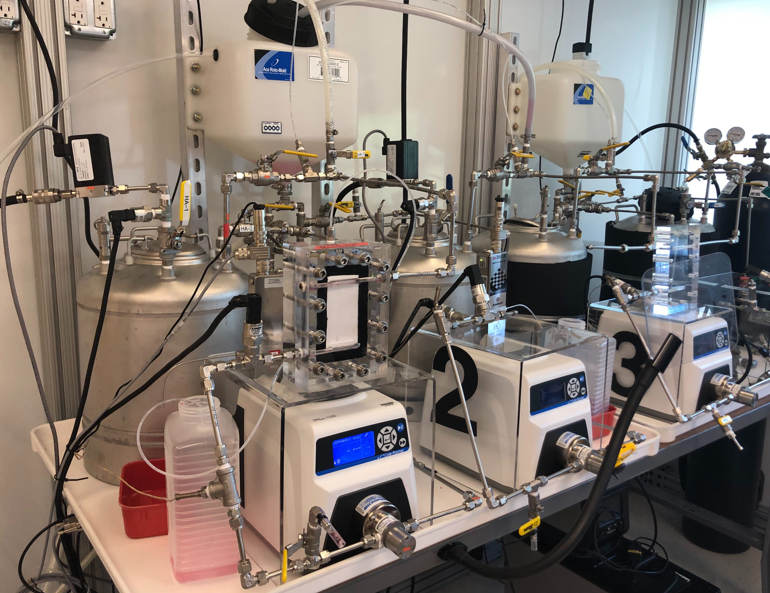
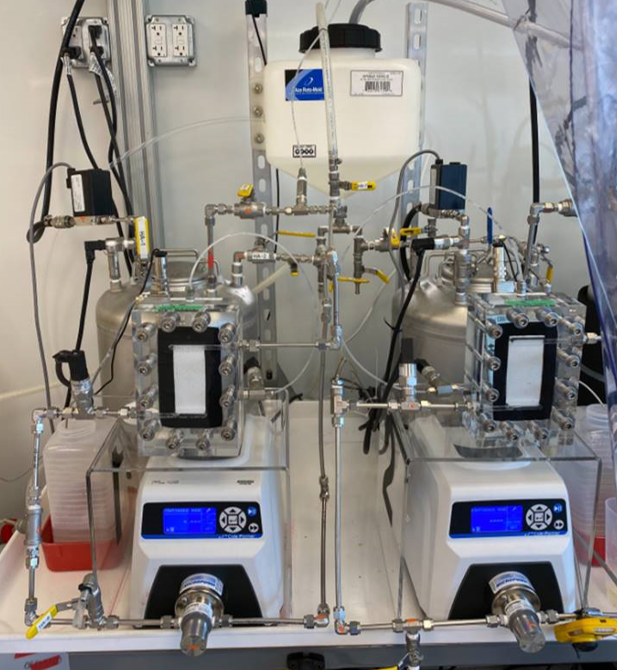
Above are images of two of the 4 application testing systems I built for premilinary testing of customer wastewater at ZwitterCo.
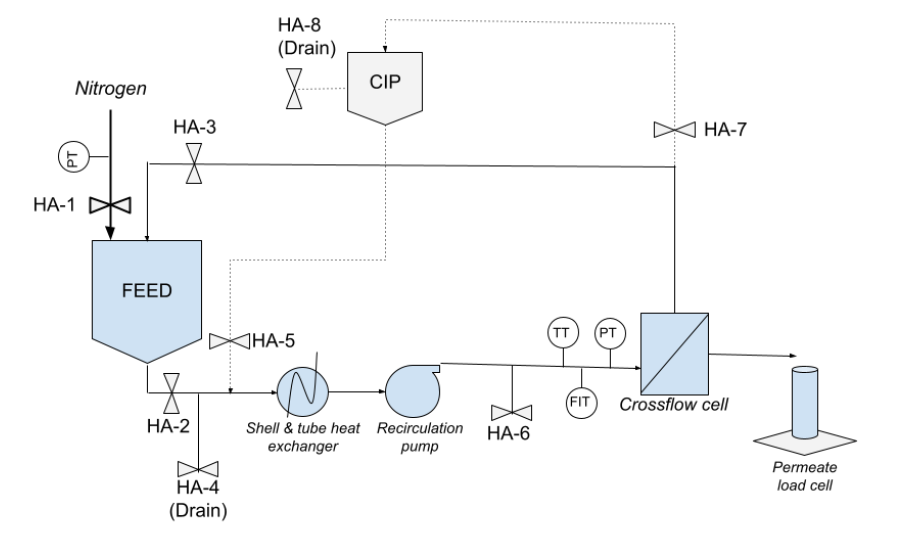
I started by sketching a simple diagram (called Process and Instrumentation diagram) representing one system and its components, as well as the process flow and how all components are connected/interacted with one another. Based on this diagram, I can organize and figure out what the main equipment and instruments needed for the system, and understand the main requirements of the systems. I then researched on popular vendor websites and procured equipment that fit my criteria and the company's budget.
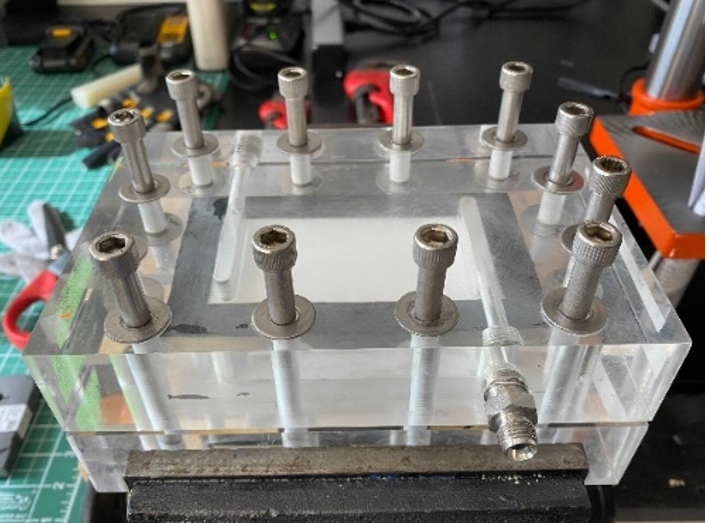
Not all components are procured, such as the membrane testing cell shown above. The membrane is sandwiched between two pieces of the cells, sealed by a custome O-ring (which I lasercut). I custom made the membrane cells using machine shop equipment (CNC mill) since we could not find ready made cells with reasonable costs and approriate design.
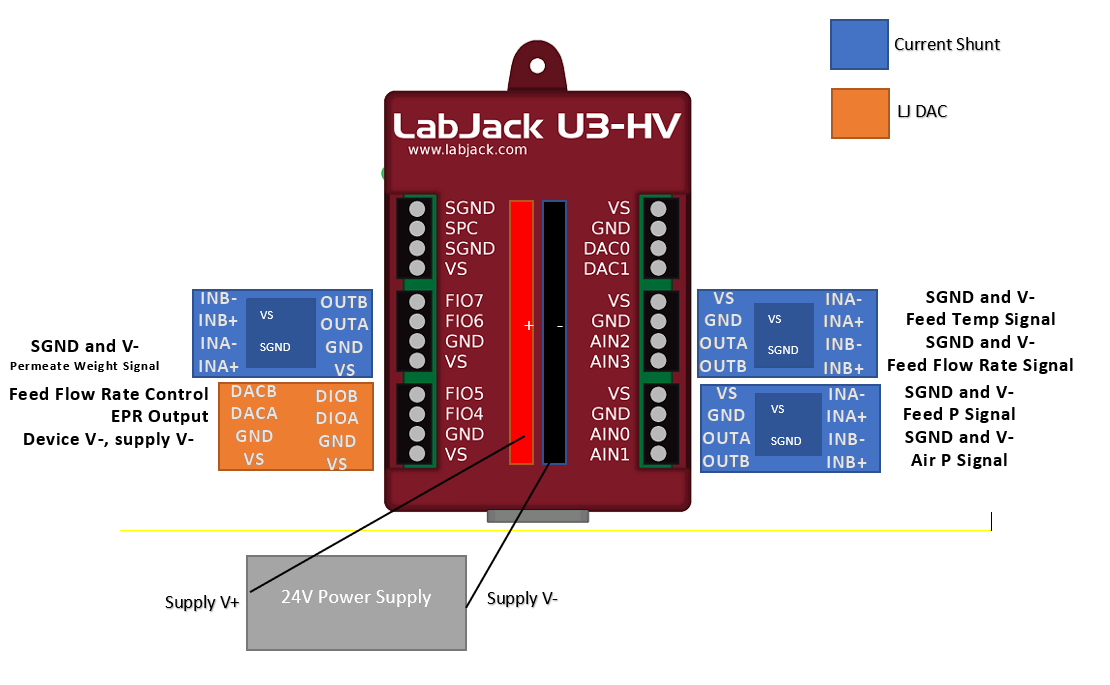
The system is designed to be able to run unsupervised overnight, so it is almost fully automated and controlable remotely. We used a LabJack device for data acquisition and control by dealing with inputs from sensors and outputs to actuated devices.
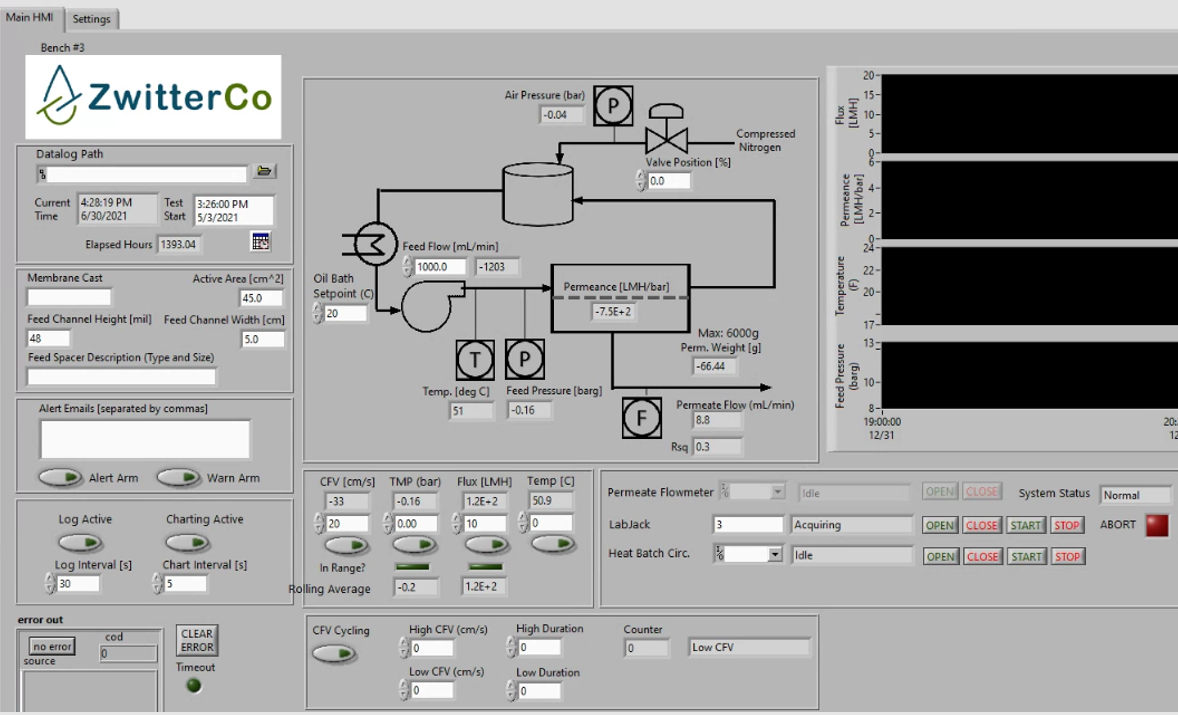
LabVIEW is a systems engineering software that can be used for industrial and laboratory automation. In this project, LabVIEW was used to create the front-end aspect (HMI to interact with users and display data) and the back-end (communicating with LabJack for I/O, data analysis and storage, signal processing, controls logic, exception handling).
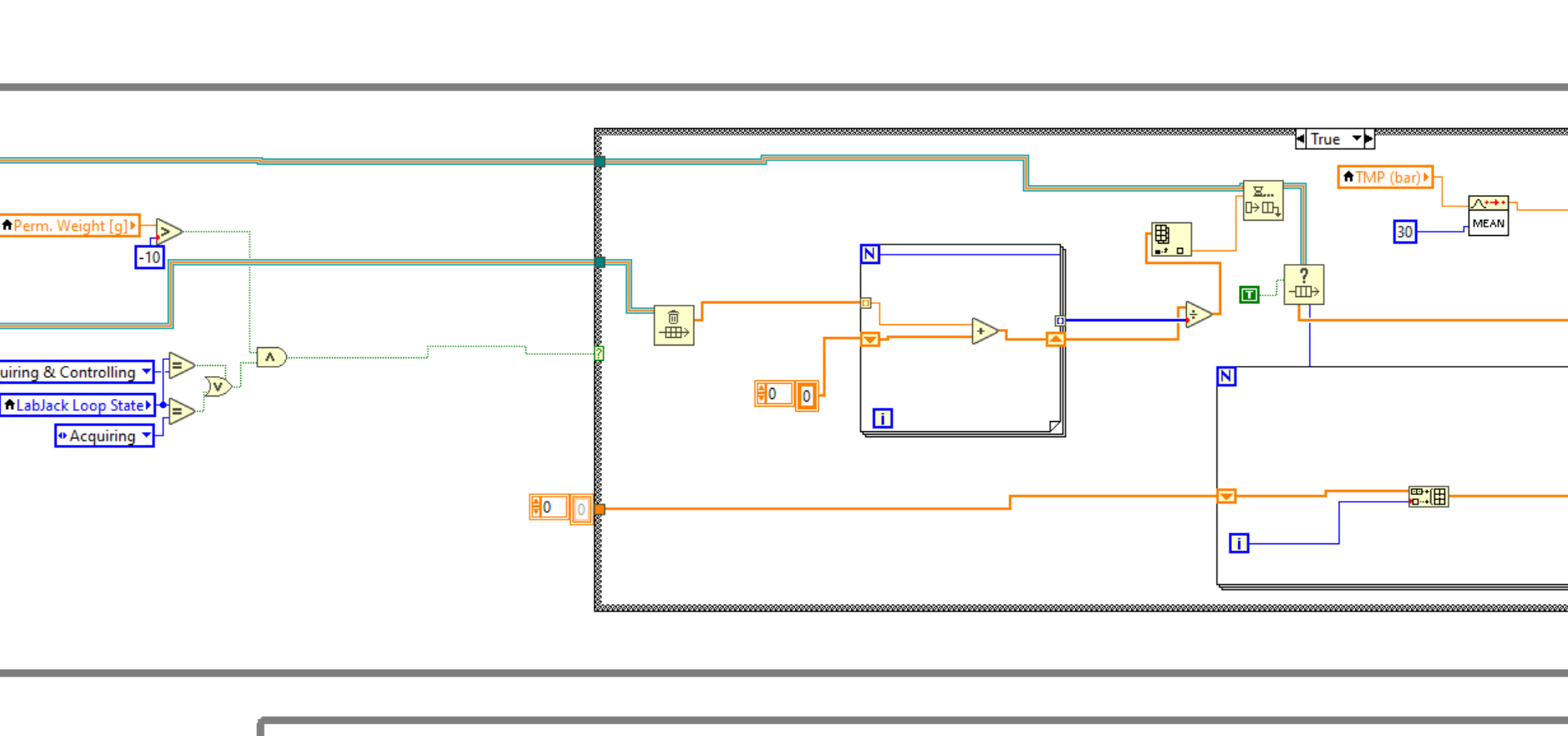
It was difficult at first since as a Chemical Engineer, I did not have much experiences in LabVIEW, and it is a graphical programming interface so I was not as familiar with it since I have mostly coded only in C++ and Python before. However, National Instruments provide pretty good documentation and tutorials online for me to self-learn how to program an automated system. In addition, by breaking down a large automation software into many small tasks to be achieved, the project was much less daunting, and I was able to successfully build the software for data acquisition, analysis, and automation.